
A little history…
I started my modular journey using a store-bought case. Specifically, the Cre8Audio NiftyCase, which are nice cases, with a lot of good features for beginners. What they are not, though is electrically resilient. And by that, I mean that they did not fare well when powered up with a faulty module installed. Being new to SDIY, at the time, I built a lot of faulty modules.
After blowing up two NiftyCases, I bit the bullet and set out to build my own, using a more robust power supply (TipTop Audio Zeus, if you’re keeping track), and more storage space. In the process of designing this new case, I made a weird decision: include an Intellijel-format 1U rail in the case.
I didn’t own any Intellijel modules, but as others before me have concluded, this 1U rail was a great place to mount common utilities. And thus, this page is dedicated to basic, common utilities that I’ve built for my 1U rails. None of these circuits are particularly unique. But, some of them I found strangely difficult to source schematics for. Hopefully this page will save someone else the trouble.
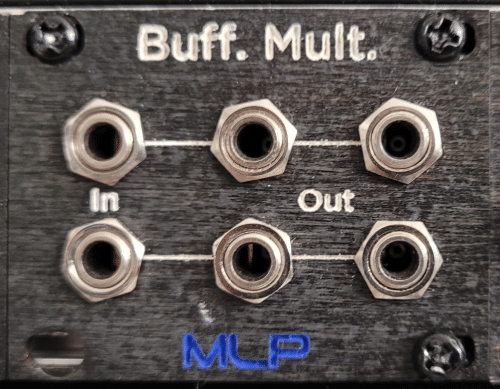
Buffered Multiple
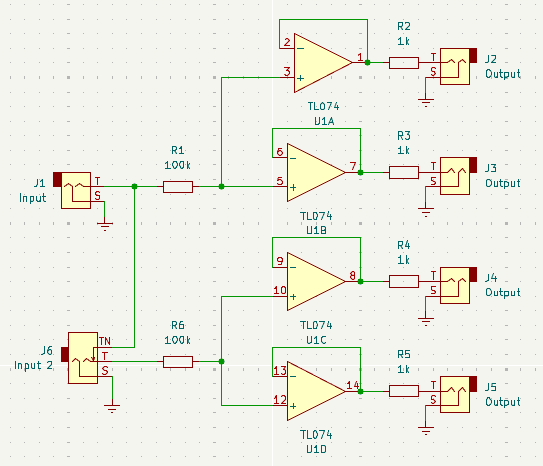
No frills unity gain buffers to create multiple copies of a signal, without loading down the source. Helpful for controlling multiple oscillators from the same voltage source, without affecting the oscillator pitch.
Schematic, as shown, normals the first input to the second. If nothing is plugged into Input 2, all 4 outputs will be copies of Input 1.
BOM
- Resistors
- 1k (4) – R2, R3, R4, R5
- 100k (2) – R1, R6
- TL074 (1) – U1
- Audio jacks (5) – J1, J2, J3, J4, J5
- Switched audio jack (1) – J6
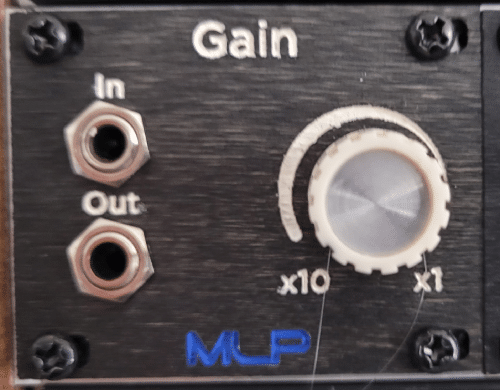
Gain
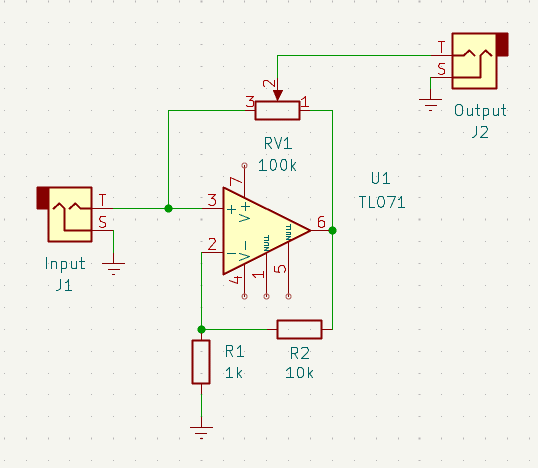
Need a boost? Gain gotcha covered. Up to 10x amplification of any signal in a straightforward circuit. I can squeeze one of this in a 10HP 1U module, and have at least one in every set of 1U rails. Super handy for recovering undesirable attenuation.
Bear in mind that the amplification is limited by the power rails and the headroom of the op amp. You can’t input 12V and get 120V, but you can input 1V and get 10V
BOM
- Resistors
- 1k (1) – R1
- 10k (1) – R2
- Potentiometer
- 100k (1) – RV1
- TL071 (1) – U1
- Audio jacks (2) – J1, J2
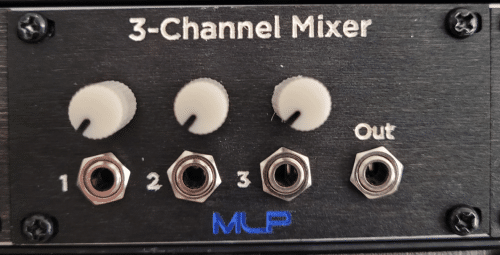
3-Channel Mixer
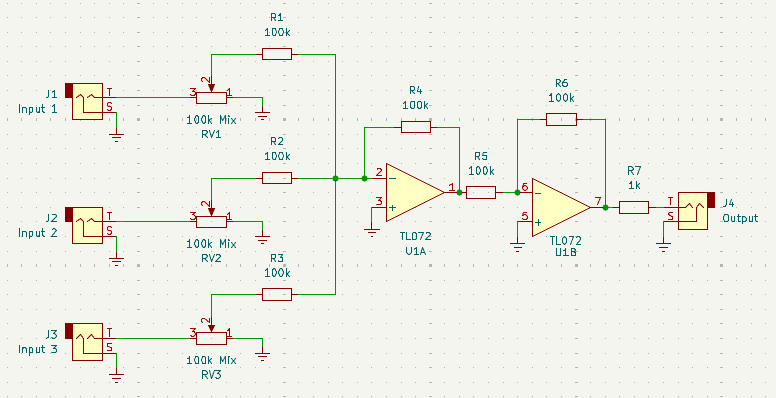
Better than the Spice Girls … 3 Become 1. This is another utility that I have at least one of in each set of 1U rails. Invaluable for routing multiple audio signals to a single effect or multiple control voltages to a single CV input.
BOM
- Resistors
- 1k (1) – R7
- 100k (6) – R1, R2, R3, R4, R5, R6
- Potentiometers
- 100k (3) – RV1, RV2, RV3
- TL072 (1) – U1
- Audio jacks (4) – J1, J2, J3, J4
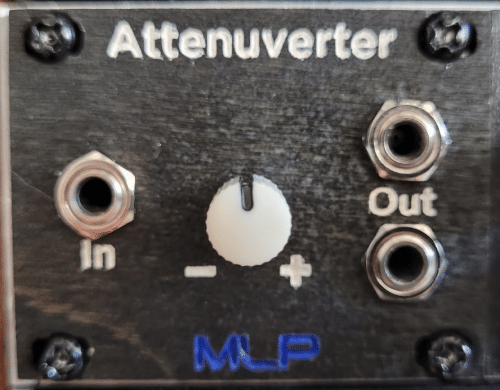
Attenuverter
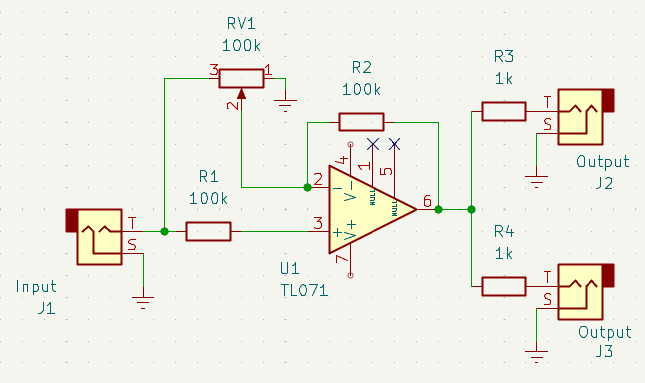
Two tools in one! When the pot is at center position*, the signal is completely attenuated. Turn the pot one way and the signal fades to full strength. Turn the pot the other way and the signal fades to fully inverted.
*”Center position” should be in quotation marks. It will be roughly in the center. You could make it perfectly in the center, but it would require trim pots for calibration.
BOM
- Resistors
- 1k (2) – R3, R4
- 100k (2) – R1, R2
- Potentiometer
- 100k (1) – RV1
- TL071 (1) – U1
- Audio jacks (3) – J1, J2, J3
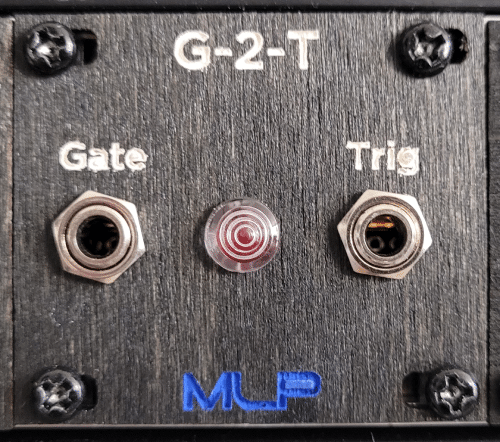
Gate-to-Trigger Converter
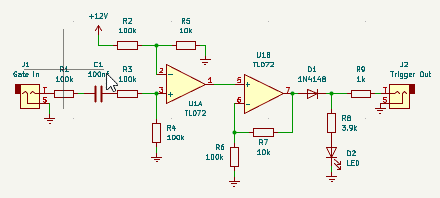
I have a few modules that respond better to triggers than to gates, so this is an invaluable tool for maximizing the usability of those modules.
BOM
- Capacitors
- 100nf (1) – C1
- Resistors
- 1k (1) – R9
- 3.9k (1) – R8
- 10k (2) – R5, R7
- 100k (5) – R1, R2, R3, R4, R6
- Diode
- 1N4148 (1) – D1
- LED (1) – D2
- TL072 (1) – U1
- Audio jacks (2) – J1, J2
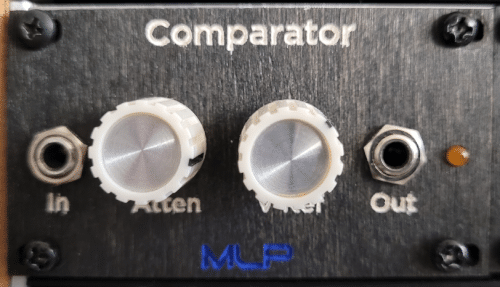
Comparator
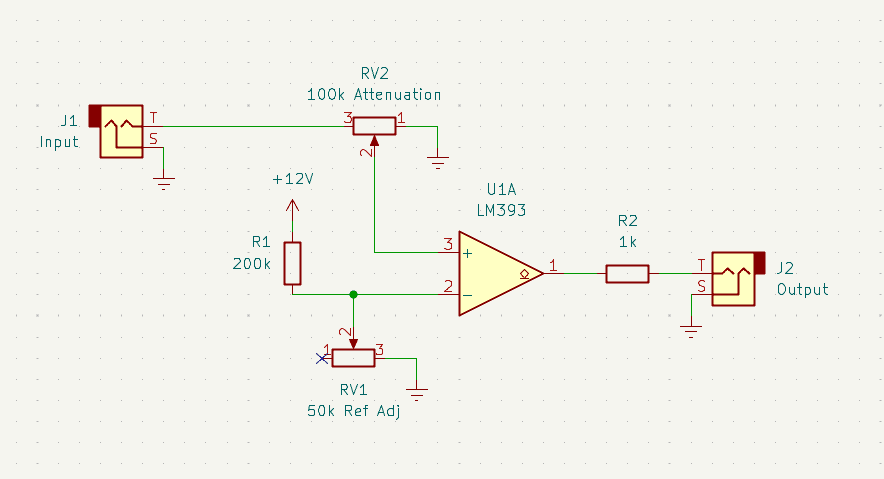
This one is a little less obvious than some of the others. The LM393 is used as a comparator, which compares the input signal to the reference voltage, and only let’s the input signal through if it exceeds the set threshold.
Ref Adj pot sets the threshold of the reference voltage. Attenuation pot allows for fine tuning the input amplitude.
What’s it for? Any situation where you want to route control voltage based on amplitude. For example, you can copy a 1V/oct signal, route one copy to one VCO, then the other to the comparator. The comparator can then be set up so that it routes only the highest notes to another VCO, to accent those notes. Or something similar with two VCFs. You get the idea.
BOM
- Resistors
- 1k (1) – R2
- 200k (1) – R1
- Potentiometers
- 50k (1) – RV1
- 100k (1) – RV2
- LM393 comparator (1) – U1
- Audio jacks (2) – J1, J2
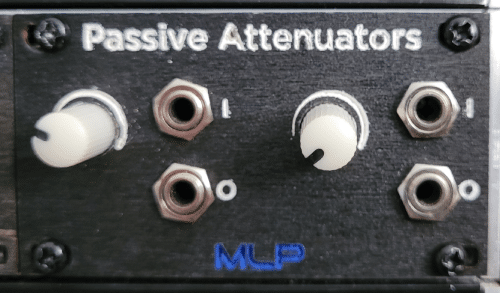
Passive Attenuators
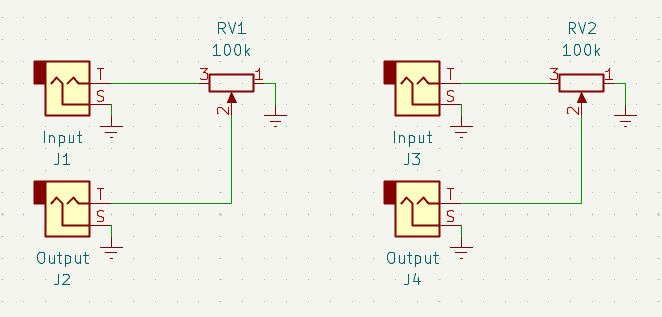
The absolute simplest utility. It doesn’t even require power. Use it when you need to decrease the strength of a signal (audio or control).
Because there is no power connection, you might run into some ground-related issues. Technically everything should be grounded through the input and output cables. But, if things aren’t working as expected, you might need to run a jumper cable to ground on another module.
BOM
- Potentiometers 100k (2) – RV1, RV2
- Audio jacks (4) – J1, J2, J3, J4
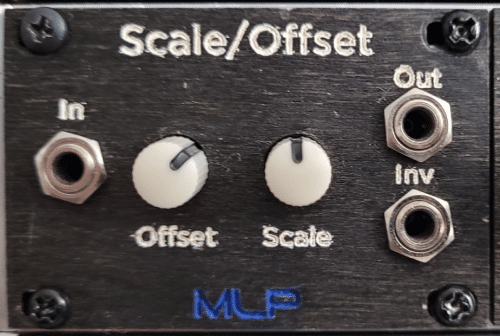
Scale/Offset
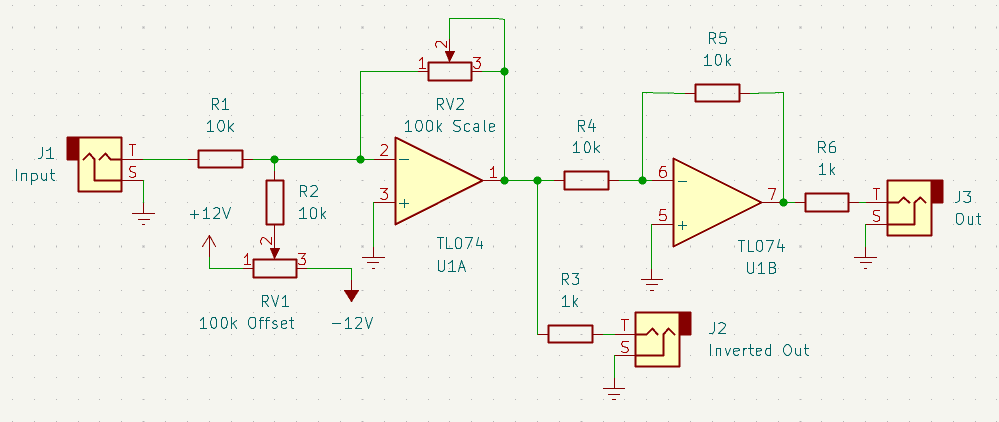
This is a stripped down version of the core functionality of Voltage Daikaiju. Scale is used to adjust the amplitude of a voltage signal. Offset is used to add DC to the input signal, offsetting the “ground” reference around which an oscillator (such as an LFO) swings. Useful for tweaking LFOs and envelopes to get more or less effect when used as control voltage.
Includes an inverted output, in case that’s useful for you. Leave it out if it’s not. I’m not the boss of you.
BOM
- Resistors
- 1k (2) – R3, R6
- 10k (4) – R1, R2, R4, R5
- Potentiometers
- 100k (2) – RV1, RV2
- TL074 (1) – U1
- Audio jacks (3) – J1, J2, J3
5V On Demand
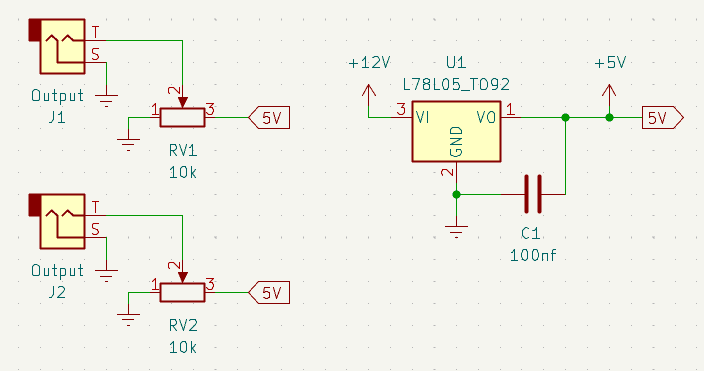
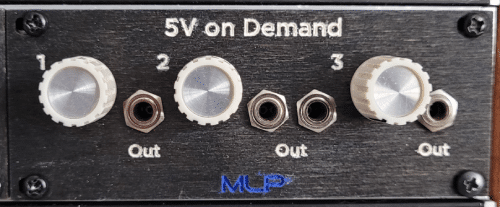
This is a surprisingly useful, and crazy simple, utility. Use it to boost or add positive DC offset to control voltage. It’s also great for something like Electric Druid’s ENVGEN ADSR chip–I use it to dial in a constant voltage to maintain attack and sustain at desirable levels.
BOM
- Capacitors
- 100nf (1) – C1
- Potentiometers
- 10k (2) – RV1, RV2
- Audio jacks (2) – J1, J2
- L78L05 voltage regulator (or similar) (1) – U1
Glide
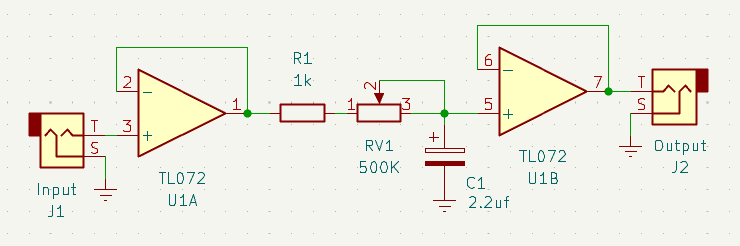
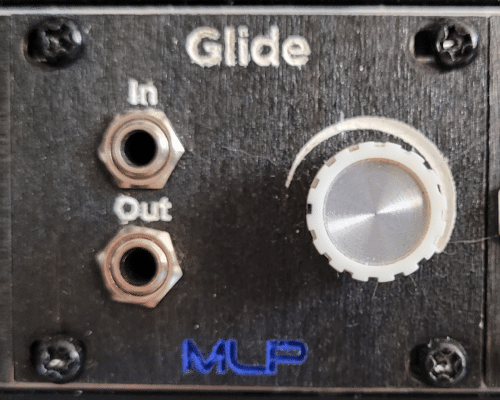
Standalone glide (aka glissando or portamento, for those not versed in Mooglish) for making those classic Gary Numan sounds.
BOM
- Capacitors
- 2.2uf electrolytic (1) – C1
- Resistors
- 1k (1) – R1
- Potentiometer
- 500k (1) – RV1
- TL072 (1) – U1
- Audio jacks (2) – J1, J2
Leave a Reply